
- +971 56 487 2917
Moving terms Explained
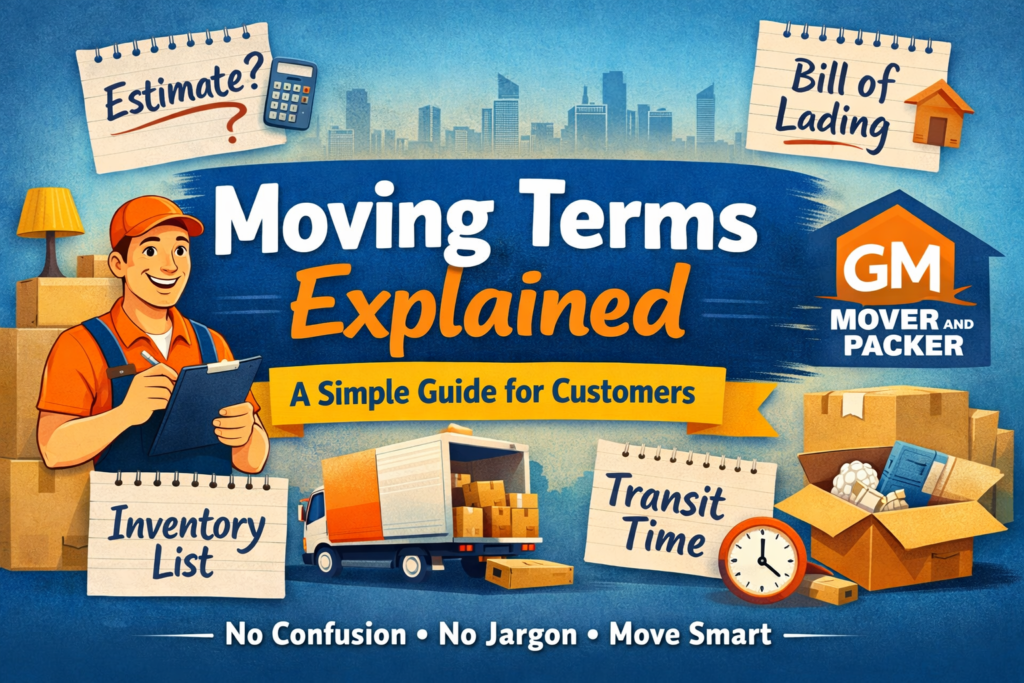
A Simple Guide for Customers
Moving sounds simple.
Until the mover starts using words you’ve never heard before.Inventory.Bill of lading.Access fee.Suddenly you feel lost. A bit nervous too.
This guide breaks down common moving terms in plain language. No confusion. No stress. Just clarity.
What Is an Estimate in Moving?
An estimate is the price idea.Not always the final bill.There are usually three types.
Non-binding. Binding. Binding not-to-exceed.
Most customers only hear one number and stop listening. That’s where problems start.
Always ask which estimate you’re getting. A binding estimate means the price stays same. Mostly.
Non-binding can change after the move.Simple rule.
Written estimate is safer than a phone quote.
Understanding Bill of Lading
This is an important paper. Very important.Bill of Lading is your moving contract.
It shows services, dates, costs, and responsibilities.
Many people sign it without reading. Big mistake.
Once signed, it becomes legal agreement.Before signing, check names, addresses, and listed services.
One small error can turn into big headache later.
Inventory List Explained for Customers
Inventory is the list of your items.
Every sofa. Every box. Every chair.
Movers use it to track condition and quantity.
Scratches, dents, marks — they note everything.
You should walk with the mover while inventory is made.
If something is missing or wrong, speak up. Politely. But clearly.
Inventory protects both sides. Not just movers.
Cubic feet is how space is measured.
Not weight. Space.
Some movers charge by volume instead of hours.
This mostly happens in apartment moves or long distance jobs.
If your mover uses cubic feet pricing, make sure it’s explained clearly.
Hidden space charges are common issue in bad companies.
Ask questions. Always.
Packing Services and Packing Materials
Packing service means movers pack for you.Boxes. Bubble wrap. Tape. Everything.Sounds expensive. But saves time and damage risk.
Especially for glass, electronics, and kitchen items.
Packing materials may or may not be included.
Clarify before move day.
Some customers prefer self-packing. That’s okay too.
Just pack properly. Or damages may not be covered.
Access Fees and Extra Charges
This is where surprise bills come from.
Access fees include stairs, long walking distance, elevators not working, narrow streets.
Things movers didn’t expect.
If your building has issues, tell the mover early.
Honesty saves money.
Hidden fees usually happen due to poor communication.
Not always cheating. Sometimes misunderstanding.
Transit Time Meaning in Relocation

Transit time is delivery time.
Not loading time.
Some moves deliver same day.
Others take days.
If you’re moving long distance, transit window may be given instead of exact date.
That’s normal in moving industry.
Ask clearly. When will my items arrive?
Don’t assume.
What Is Valuation Coverage?
Valuation is not insurance.People confuse this a lot.Basic valuation is limited coverage. Very limited.
Usually based on weight.
Full value protection costs more but offers better safety.
If item breaks, mover repairs or replaces.
Always ask what valuation is included.
Never skip this discussion.
Storage Services in Moving
Sometimes new place isn’t ready.
Storage becomes necessary.
Storage can be short-term or long-term.
Warehouse based.
Ask about access, security, and climate control.
Cheap storage often means poor conditions.
Your belongings deserve protection. Even in storage.
Final Walk-Through Before Moving Day
This is the last check.Before truck leaves.
Walk through your home with mover.Confirm items, rooms, and services.Remove personal valuables. Documents. Jewelry. Cash.
Never pack these.
A calm final walk-through prevents 90% of moving problems.
True story.
Final Thoughts
Moving doesn’t have to feel confusing.Understanding these terms gives you control.
Ask questions. Read documents. Stay involved.A good mover will never rush you.
If you’re planning a move in UAE, working with experienced professionals matters.
GM Mover and Packer focuses on clarity, care, and honest service. Every move. Every time.

Alexandra Hayes
Alexandra Hayes is a seasoned business writer and researcher with a focus on the moving and relocation industry. Over the past 5 years, she has gained hands-on experience in residential and commercial moves, sharing insights on everything from planning and logistics to execution. Her expertise helps readers understand the moving process and choose reliable movers with confidence.
FAQs
FAQ – Moving Terms Explained – GM Mover and Packer
Q1: What are moving terms and why should I know them?
A: Moving terms are words and phrases used by movers, like bill of lading, inventory, or transit time. Knowing them helps avoid confusion and surprise charges during your move.
Q2: What is a bill of lading in moving?
A: A bill of lading is the official contract between you and your mover. It lists all services, costs, and responsibilities. Always check it before signing.
Q3: What is an inventory list and how is it used?
A: An inventory list records every item being moved, including condition and quantity. Walk through your home with the mover to verify accuracy.
Q4: What does cubic feet mean in moving?
A: Cubic feet measures the space your items take in the truck. Some movers charge by volume instead of weight. Clarify pricing before moving day.
Q5: What is valuation coverage in moving?
A: Valuation is the mover’s liability for lost or damaged items. Basic coverage is limited; full value protection costs more but offers better protection.
Q6: Are packing services included in moving?
A: Not always. Some movers offer packing services and materials like boxes, tape, and bubble wrap. Others expect you to pack yourself. Always confirm.
Q7: What are access fees?
A: Access fees cover difficult conditions like stairs, long walkways, or narrow streets. These can add extra charges if not discussed in advance.
Q8: How long does transit time take?
A: Transit time depends on distance and move type. Local moves may be same-day, while long-distance moves can take several days.
Q9: Do movers provide storage services?
A: Yes. Some moves require short-term or long-term storage. Always check security, climate control, and access rules before storing items.
Q10: What should I do during the final walk-through?
A: Walk through your home with the movers. Confirm all items, rooms, and services. Remove valuables like documents and jewelry. This prevents most moving issues.