
- +971 56 487 2917
7 Types of Packaging Materials and How to Use Them Best in the UAE
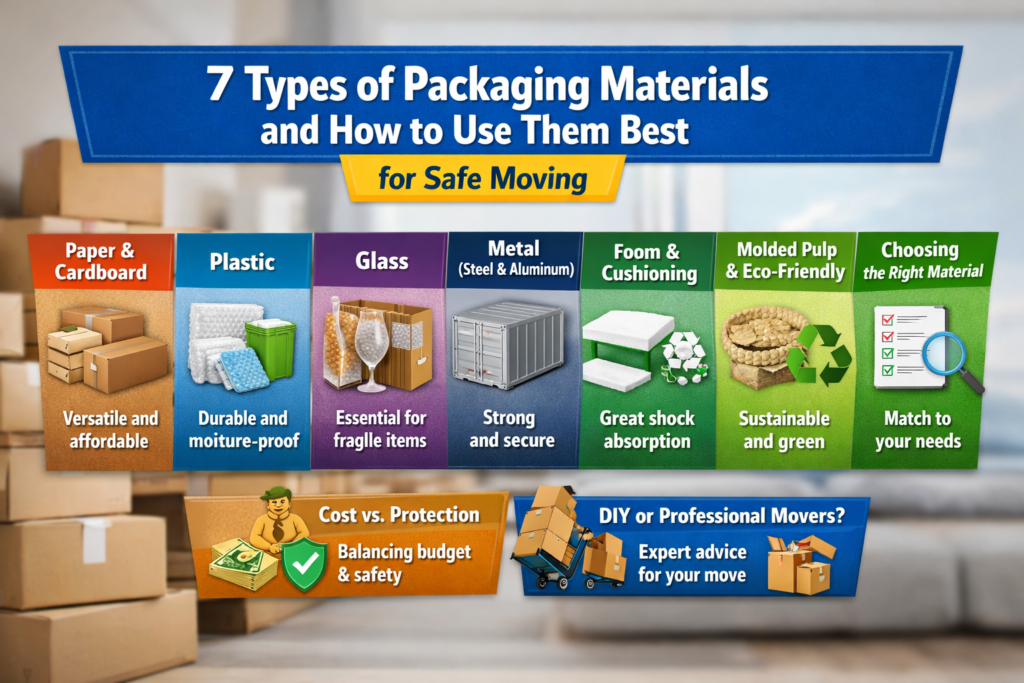
Moving can feel confusing when you don’t know which packing materials actually protect your belongings. Choosing the right supplies is not just about boxes; it directly affects safety, time, and overall stress. This guide on 7 Types of Packaging Materials and How to Use Them Best explains how smart choices improve packing efficiency, reduce damage, and make packing for a move more organized. From fragile kitchen items to heavy furniture, the correct materials support better protection during loading and transport.
Whether you plan GM packing or rely on professional help, understanding best packing materials, moving supplies, packing materials for moving, and packing materials for protection helps you avoid costly mistakes and enjoy a smoother moving experience.
Why Choosing the Right Packaging Material Matters
The right packing materials protect your belongings from heat, dust, and vibration during loading and unloading. In the UAE, poor choices often lead to cracks, scratches, and delays. Smart packing strategies support damage prevention while keeping your timeline realistic. When you plan well, organizing a move becomes calmer and more predictable.
Choosing suitable packing materials for moving also improves safety. Proper wraps and boxes enhance shock absorption, improve storage protection, and simplify moving day preparation. Many professional movers agree that the right materials cost less than replacing damaged items later.
Paper and Cardboard Packaging Materials
Paper and cardboard remain the backbone of moving supplies. Strong moving boxes made from corrugated cardboard handle stacking well and support inventory tracking. Clean packing paper wraps dishes and fills gaps, boosting packing materials for protection without adding weight.
In the UAE, box quality matters due to heat and long drives. Reinforced cartons such as dish packs and wardrobe boxes protect contents while supporting neat box labeling and color coding. These choices improve control during packing for a move and unpacking later.
| Cardboard Type | Best Use | Protection Level |
|—|—|—|
| Single-wall boxes | Clothes, toys | Medium |
| Double-wall boxes | Books, tools | High |
| Dish packs | Kitchenware | Very High |
Plastic Packaging Materials
Plastic options perform well in hot climates. Stretch wrap secures drawers and cushions surfaces, helping with furniture protection. Plastic bins resist moisture and support repeat use, which lowers moving supplies cost over time.
Plastic also simplifies electronics packing. When combined with bubble wrap and foam sheets, it improves shock absorption and storage protection. Many people search for packing supplies near me and choose plastic for reliability in a long-distance move.
Glass packaging needs extra care because fragile items break easily under pressure. Glass containers alone are not enough. They must pair with cushioning to achieve proper glassware protection and reduce vibration damage.
For décor and tableware, combine rigid containers with soft layers. This approach improves packing materials for protection and supports damage prevention. Clear box labeling such as “fragile” helps teams handle cartons carefully during loading and unloading.
Metal Packaging Materials (Steel & Aluminum)
Metal crates serve specialized needs. They protect high-value goods during storage or commercial transport. Steel and aluminum resist crushing and theft, making them useful for warehouses and sensitive equipment.
Although the packing materials price is higher, metal options reduce risk on complex moves. They suit clients who prioritize security over budget and often work with professional packing materials for business relocations.
Foam and Cushioning Materials
Cushioning materials absorb movement that causes damage. Bubble wrap, foam sheets, and packing peanuts reduce friction and provide essential shock absorption. These materials protect screens, artwork, and décor during transit.
Cushioning also boosts packing efficiency. When items fit snugly, boxes stack better and travel safer. Pair cushions with moving blankets and mattress bags for complete furniture protection and mattress care.
| Cushion Type | Ideal Items | Key Benefit |
|—|—|—|
| Bubble wrap | Electronics, frames | Impact resistance |
| Foam sheets | Screens, plates | Scratch prevention |
| Moving blankets | Furniture | Surface protection |
Molded Pulp and Eco-Friendly Packaging Options

Eco-friendly options are becoming popular across the UAE. Molded pulp trays and recycled paper reduce waste while offering solid packing materials for protection. They suit households focused on sustainability without sacrificing safety.
These materials also lower clutter after the move. Reusable solutions improve packing budget control and align with responsible disposal practices. Many professional movers now include green options in their moving packing materials.
How to Choose the Best Packaging Material for Your Items
Choosing wisely depends on weight, fragility, and distance. Heavy items need sturdy boxes and support tools. Delicate goods require layered protection for electronics packing and décor safety.
Match materials to your move type. Apartments, villas, and offices differ. A clear packing supplies checklist helps with organizing a move and ensures nothing gets missed during moving day preparation.
Cost vs Protection – Budgeting for Packing Materials
Balancing cost and safety matters. Spending slightly more on quality packing materials often reduces replacement expenses later. Your packing cost depends on home size, distance, and item value.
Here’s a simple cost overview for the UAE market.
| Home Size | Typical Packing Budget |
|—|—|
| Studio / 1-bedroom | AED 400–800 |
| 2–3 bedrooms | AED 900–1,600 |
| 4+ bedrooms | AED 1,800+ |
Smart planning controls moving cost and keeps packing materials price reasonable.
Professional Movers vs GM Packing – What Experts Recommend
GM packing works for simple moves with flexible schedules. However, complex relocations benefit from experience. Hire professional packers when handling antiques, offices, or tight timelines.
Professional movers bring tools for moving like furniture sliders and dollies and hand trucks. They reduce risk, save time, and often lower overall stress. One relocation advisor says that paying for skill usually costs less than paying for mistakes.
Final Thoughts
The right packing materials turn chaos into control. With smart choices, clear labeling, and the right support, your move becomes safer and smoother. Whether you choose GM packing or professional movers, using proven packing materials for moving always pays off.
Why Choosing a Professional International Moving Company Matters
Experts bring tools you do not. Professional packing services use tested materials, advanced custom crating solutions, and proven systems for damage-free shipping. Their experience reduces risk you cannot eliminate alone.
When stakes are high, professional help turns fragile goods transportation into a controlled process instead of a gamble.
“Good packing is invisible when it works and unforgettable when it fails.”
Packing fragile items is not about fear. It is about respect for what you ship. When you pack with intention, your belongings arrive safely, every time.

Alexandra Hayes
Alexandra Hayes is a seasoned business writer and researcher with a focus on the moving and relocation industry. Over the past 5 years, she has gained hands-on experience in residential and commercial moves, sharing insights on everything from planning and logistics to execution. Her expertise helps readers understand the moving process and choose reliable movers with confidence.
FAQs
1. What is the best material for packing?
The best material for packing depends on the type of items you are moving. For fragile items like glassware and electronics, bubble wrap, foam sheets, and sturdy moving boxes offer the most protection. Heavy items such as furniture or appliances benefit from reinforced cardboard, plastic bins, or even metal crates for extra security. Using the right material enhances packing efficiency, ensures damage prevention, and reduces stress during loading and unloading.
2. Which packaging material is the best?
There isn’t a single “best” material for all situations. Corrugated cardboard boxes are versatile and affordable for most household items. Plastic bins and stretch wrap work well for moisture-sensitive goods, while bubble wrap and foam sheets protect delicate items. For eco-conscious movers, molded pulp or recycled paper provides sustainable packing materials for protection. The best approach combines different materials to match the item’s fragility, size, and move distance.
3. What are the materials used in packing?
Common packing materials include cardboard boxes, packing paper, bubble wrap, foam sheets, packing tape, packing peanuts, moving blankets, mattress bags, plastic bins, stretch wrap, and specialty boxes like dish packs and wardrobe boxes. These materials support furniture protection, electronics packing, and safe transport. Using a packing supplies checklist ensures every item is properly secured and easy to track during the move.
4. What are the 5 P’s of packaging?
The 5 P’s of packaging are Product, Price, Place, Promotion, and People.
Product: The item being packaged.
Price: Cost of the packaging and its impact on overall expenses.
Place: Where the product will be stored, shipped, or displayed.
Promotion: How packaging can support branding or marketing.
People: The target audience who interacts with the package.
These principles help businesses balance packing materials price with functionality, especially for commercial or long-distance moves.
5. What are the 4 C’s of packaging?
The 4 C’s of packaging are Customer, Cost, Convenience, and Communication.
Customer: Packaging should meet user needs.
Cost: Keep packing budget efficient without compromising safety.
Convenience: Easy to handle, load, and unload.
Communication: Provides important information through labels or instructions.
Applying the 4 C’s ensures your packing materials for moving are practical and user-friendly, whether GM or with professional movers.
6. What are the 7 basic steps to packaging design?
The 7 basic steps to packaging design are:
Research – Understand your items and moving conditions.
Define Objectives – Decide whether protection, cost-saving, or sustainability is priority.
Select Materials – Choose suitable best packing materials like boxes, bubble wrap, or eco-friendly options.
Design Structure – Determine box size, layering, and cushioning.
Test Packaging – Check for durability, weight tolerance, and ease of loading and unloading.
Label and Color Code – Create clear box labeling and tracking system.
Review & Adjust – Refine the design for maximum packing efficiency and protection.