
- +971 56 487 2917
How Much Does It Cost to Move? A Complete Moving Cost Breakdown
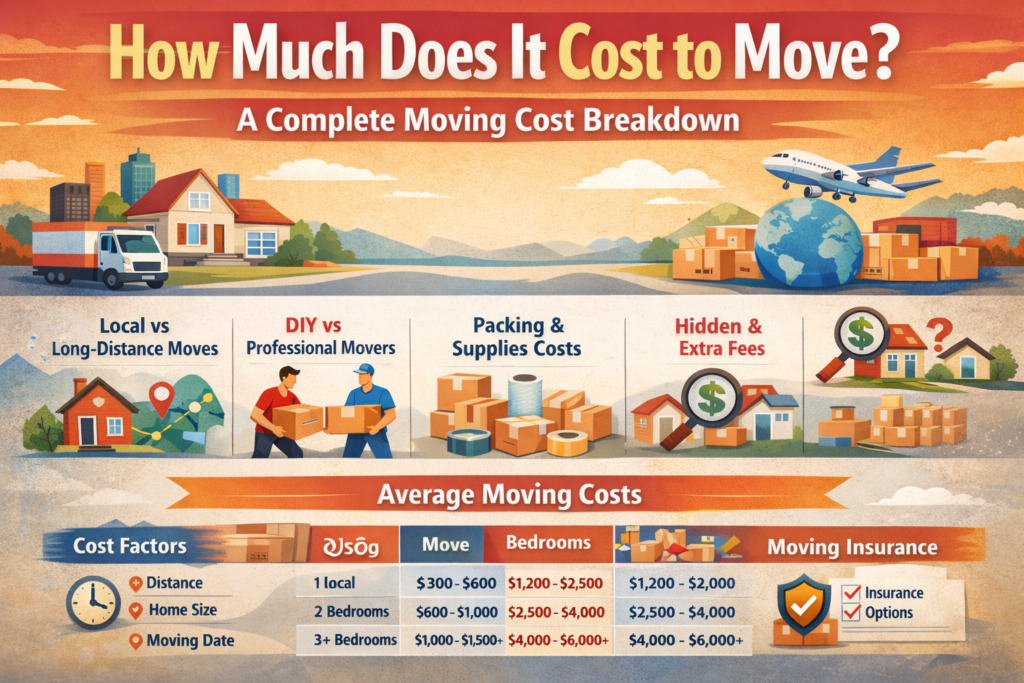
Moving to a new home often starts with one big question: how much does it cost to move? The answer is rarely simple. Your moving costs depend on distance, timing, and how much you own. Many people underestimate the cost to move, which can quickly disrupt a carefully planned moving budget. From hiring movers to buying boxes, every decision affects your final moving price.
Understanding the average moving cost helps you plan smarter and avoid last-minute stress. This guide breaks down every expense clearly, so you know what to expect and how to prepare. With the right information, moving becomes manageable instead of overwhelming.
Average Moving Costs Explained
The average moving cost in the UAE depends mainly on the distance of your move and the size of your home. For short relocations within Dubai or nearby Emirates, the average cost for a local move usually falls between AED 1,100 and AED 5,500. Smaller apartments stay on the lower end, while larger villas or houses push costs higher due to moving labor hours and the size of the moving truck required.
For longer relocations, such as moving across Emirates or to neighboring countries, the price rises quickly. Long-distance moves often range from AED 4,500 to AED 22,000, depending on fuel, mileage, and the weight of household goods. A clear cost breakdown by bedroom size helps you estimate a realistic total moving cost estimate in the UAE.
| Home Size | Local Apartment Moving Cost (AED) | Long-Distance House Moving Cost (AED) |
|---|---|---|
| 1 Bedroom | 1,100–2,200 | 4,500–9,000 |
| 2 Bedrooms | 2,200–3,700 | 9,000–14,500 |
| 3+ Bedrooms | 3,700–5,500+ | 14,500–22,000+ |
Key Factors That Affect Moving Prices
Several factors that affect moving costs shape your final moving price. The cost depends on home size and distance, yet access matters just as much. Stairs, elevators, long carry distances, and parking restrictions influence moving company pricing and total time spent.
Timing also plays a critical role. Moving date pricing rises during busy periods. Weekend moving costs and summer moving costs are higher because demand peaks. Choosing weekdays or using winter moving discounts often lowers your moving budget without sacrificing service quality.
Local vs Long-Distance vs International Moving Costs
Local moving costs usually apply within a short mileage range. Movers charge hourly, which keeps pricing straightforward. You pay for crew size, truck use, and time worked. This structure makes local moves easier to estimate and manage.
Long-distance moving costs follow a different model. Pricing depends on distance and shipment weight. International moves add customs, shipping methods, and longer transit times. Moving companies determine pricing by risk and logistics, often including storage during move as an extra expense.
Hiring full-service movers means paying for convenience and speed. These services include loading, transport, and unloading. While costs rise, stress drops significantly. Professional packing services increase the bill but reduce damage and save time.
GM moving costs seem lower at first glance. Truck rental, fuel, labor help, and equipment add up fast. Many people overlook these details. When delays happen, last-minute moving services erase savings and strain your moving budget.
Packing Costs and Moving Supplies Breakdown
The packing supplies cost surprises many movers. Boxes, tape, stretch wrap, and padding feel inexpensive individually, yet packing supplies can add up quickly. Buying supplies retail often costs more than expected.
Using packing and crating services increases expenses but protects belongings. Professional packing increases cost but lowers breakage risk during fragile item moving. Items such as electronics, artwork, and glass benefit the most from expert handling.
Additional & Hidden Moving Expenses to Expect
Hidden moving costs appear when people least expect them. Storage fees, temporary housing, cleaning, and utility transfers often show up late. Additional fees for specialty items such as piano moving cost or pool table moving cost are common due to weight and handling needs.
Some items movers won’t move because of safety rules. Chemicals, propane tanks, and plants often stay behind. Planning for storage during move helps you budget for unexpected moving expenses ahead of time.
How to Estimate Your Moving Cost Accurately

To estimate moving costs accurately, start early. A moving estimate based on a free in-home estimate is the most reliable because movers see volume and access issues firsthand. Smaller homes may qualify for an online moving estimate.
Always collect multiple moving quotes so you can compare moving company prices fairly. Written estimates reduce surprises. A moving cost calculator helps early planning, but final numbers come from real inspections and clear communication.
Smart Ways to Reduce Your Moving Costs
Lowering your cost to move often comes down to timing and preparation. Booking movers in advance gives you better rates and availability. Flexible dates protect your moving budget.
Reducing belongings lowers moving labor hours. Selling or donating items cuts weight and time. Packing yourself saves money when done early and carefully, especially for non-fragile belongings.
Moving Insurance & Protection Costs Explained
Understanding moving insurance cost prevents frustration later. Movers provide valuation coverage rather than traditional insurance. The difference between moving insurance vs valuation confuses many customers. Released-value protection covers items by weight, not actual value.
Full-value protection costs more but covers the replacement value of items. Pricing depends on cost per pound valuation. Reviewing homeowners insurance moving coverage helps identify gaps. Proper liability coverage during transit protects you financially.
FAQs About Moving Costs
Many people ask how much does it cost to move and why prices differ so widely. The answer depends on distance, size, timing, and service level. Understanding these details helps you calculate your moving price accurately.
Another frequent question involves tipping. Tipping moving crew usually follows a percentage-based tipping guide. Planning this ahead avoids awkward moments and keeps your total moving cost estimate complete.
Moving becomes far less stressful when you understand your household moving expenses. With proper planning, clear estimates, and smart decisions, you stay in control of your moving budget from start to finish.
Final Thought
Relocation Services Dubai work best with early planning and the right partner. Compare options. Ask clear questions. With proper support, relocation services in Dubai turn a difficult move into a smooth transition. Your new home deserves a calm beginning.

Alexandra Hayes
Alexandra Hayes is a seasoned business writer and researcher with a focus on the moving and relocation industry. Over the past 5 years, she has gained hands-on experience in residential and commercial moves, sharing insights on everything from planning and logistics to execution. Her expertise helps readers understand the moving process and choose reliable movers with confidence.
FAQs How Much Does It Cost to Move?
What is the true cost of moving in Dubai?
The true cost of moving in Dubai depends on more than just hiring movers. It includes moving costs, packing supplies, handling specialty items like pianos or safes, moving insurance cost, and hidden fees. Local moves within Dubai are cheaper, while moving across Emirates or internationally will increase the total moving price. Planning ahead and knowing factors that affect moving costs will help you avoid surprises and stick to your moving budget.
How much should I budget for moving expenses in Dubai?
Budgeting depends on your home size, distance, and moving services. A one-bedroom apartment move within Dubai may cost AED 1,200–2,500, while a four-bedroom villa moving locally could reach AED 4,000–6,000. Add costs for packing supplies, professional packing services, storage during move, and tipping your movers to get a realistic total moving cost estimate.
How to estimate the cost of moving in Dubai?
To estimate your moving cost accurately, request a free in-home estimate from Dubai moving companies or an online moving estimate for smaller moves. Include all relevant factors: moving labor hours, packing and crating services, moving date pricing, and specialty items. Using a moving cost calculator can help you plan your moving budget efficiently and avoid unexpected fees.
How much does it roughly cost to move in Dubai?
The rough cost depends on the type of move. Local apartment moves in Dubai can range from AED 1,200–2,500. Villas or larger homes will cost AED 4,000–6,000 for local moves. Long-distance moves across the Emirates or international shipping will increase costs further. GM moving costs are lower but still require a truck, fuel, packing supplies, and insurance for fragile items.
What are the hidden costs of moving in Dubai?
Hidden moving costs include storage fees, temporary accommodation, utility setup, last-minute moving services, and additional fees for specialty items like pianos, pool tables, or safes. Some items movers won’t move, such as gas cylinders, plants, or hazardous chemicals, which may require extra handling. Always include these when you plan your moving budget to avoid surprises.